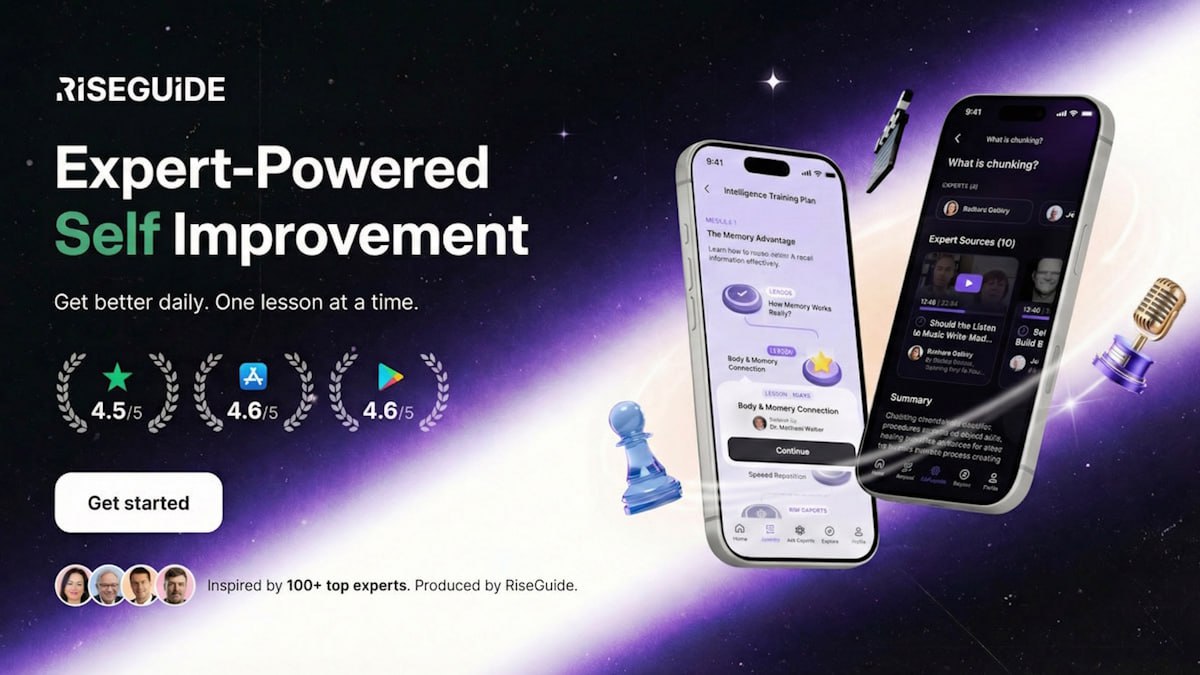
The problem is not insufficient information. People have access to more courses, summaries, and expert opinions than any previous generation. The problem is that knowledge does not automatically become conduct. Most platforms deliver insights. They stop there.
This ranking evaluates services against one criterion: does the platform help users transfer knowledge into regular behavior outside the application? Not engagement metrics. Not content hours. The key issue is whether transfer occurs.
How We Evaluated Behavior Change Support
Knowing what to do and doing it are different capacities. Behavioral change requires repetition, environmental triggers, and structured practice. Most educational platforms optimize for explanation. Application is treated as the user’s responsibility. Research on behavior modification identifies several conditions that support transfer from instruction to conduct:
- Regular practice scheduled at consistent intervals;
- Concrete actions specified rather than general advice;
- Repetition sufficient to establish automaticity;
- External triggers prompting return and execution;
- Application contexts located outside the platform.
We assessed each platform against these five criteria. The presence of these mechanisms determined ranking. Their absence explained why insight fails to become behavior.
1. RiseGuide
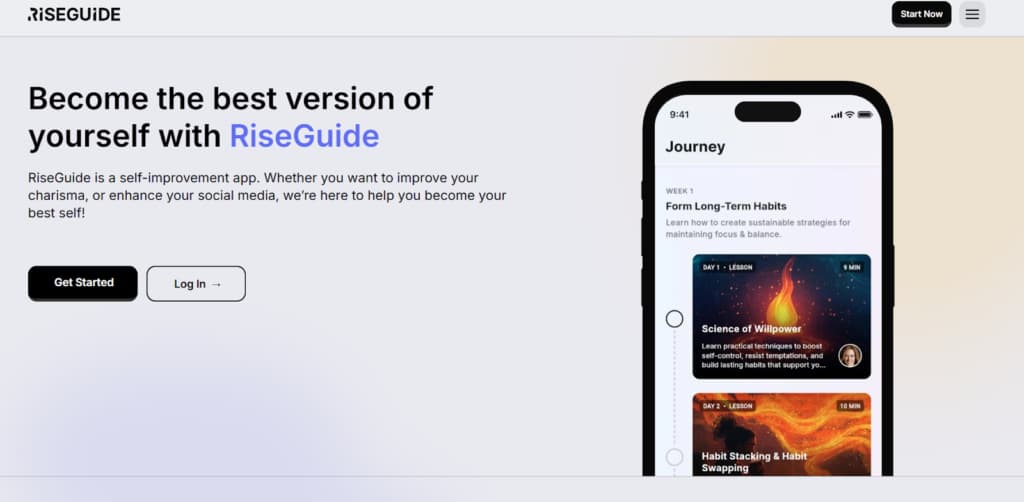
RiseGuide is constructed as a system of daily small actions rather than knowledge consumption. Lessons run three to seven minutes. Content is organized into learning paths targeting specific competencies. Users do not browse. They practice.
How It Translates Learning Into Action
Each lesson terminates in application. Frameworks are accompanied by exercises. Cheat sheets, templates, and quizzes require active response. The user does not read about communication frameworks. They complete a communication exercise.
The format respects the gap between intention and execution. Small actions reduce the initiation threshold. Daily scheduling creates repetition. Progress tracking necessitates return. Several design choices specifically address the translation problem:
- Daily practical assignments follow each lesson.
- Concrete actions are specified, not suggested.
- Regular return is prompted by the interface.
- Application occurs in real contexts outside the app.
- Action volume is calibrated to ensure completion.
This transforms knowledge exposure into behavioral rehearsal. The platform functions as a training environment, not a library.
Where Behavior Change Still Depends on the User
The platform cannot execute actions on behalf of the user. Some weeks the application will not open. Some exercises will be skipped. Some contexts will not align with lesson assumptions. Remaining dependencies on user initiative:
- Consistency determines outcome, platform cannot compel attendance.
- Results accumulate slowly and may not feel reinforcing.
- Initial orientation requires sustained attention.
- Content requires adaptation to personal circumstances.
These are not design failures. They are conditions of behavioral agency.
2. MasterClass
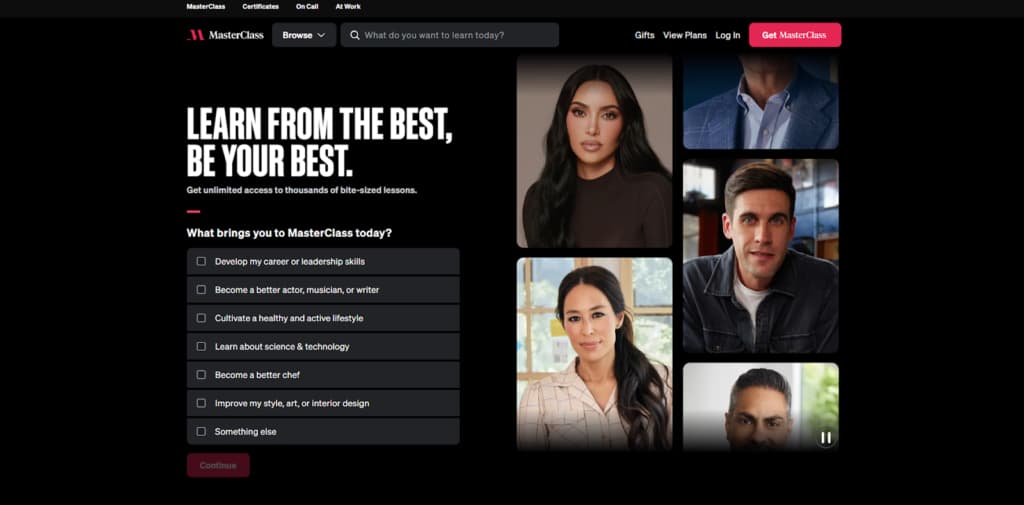
MasterClass produces high-production-value courses taught by recognized experts and celebrities. Narrative structure, cinematography, and editorial polish distinguish the service. Viewers watch Serena Williams compete. They hear Malcolm Gladwell construct arguments.
Where It Encourages Insight
Stories create emotional engagement. Chris Voss’s hostage negotiation scenarios are memorable. David Mamet’s writing sessions convey aesthetic principles through demonstration. Insight-generating elements:
- Expert narratives improve concept accessibility.
- High production sustains attention throughout viewing.
- Celebrity presence reduces initiation resistance.
- Downloadable materials accompany most courses.
These features make ideas easier to understand and remember in the moment. However, they do not by themselves lead to consistent real-world application.
Why Behavior Rarely Changes
Viewing is not doing. The format positions users as audience members, not practitioners. Thirty-minute episodes demand attention but require no response. Barriers to behavioral transfer:
- No application exercises or skill practice;
- No scheduled repetition or return prompting;
- Passive consumption requires no active response;
- Course completion is the terminal event;
- No mechanism transfers learning outside the platform.
MasterClass inspires the intention to change. It does not support the execution of change.
3. Mindvalley
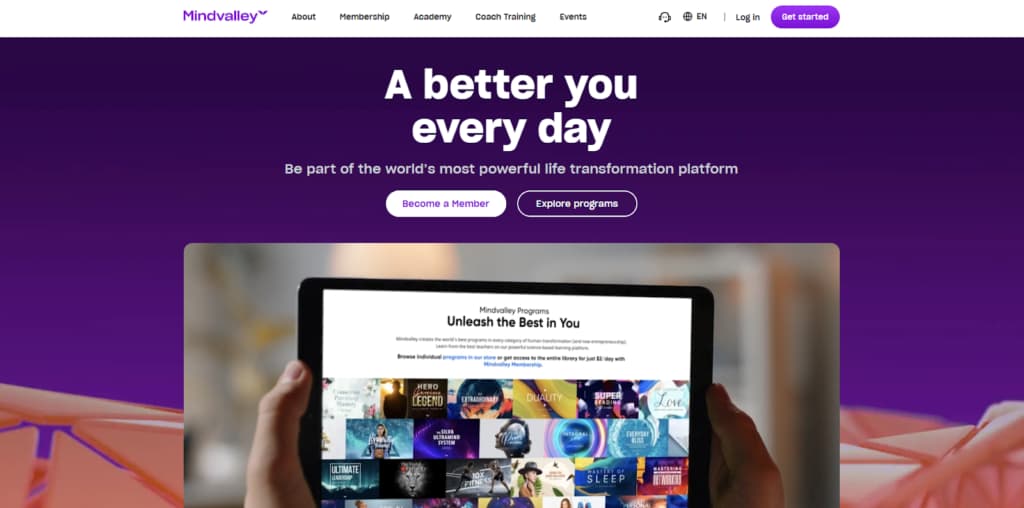
Mindvalley programs run six to eight weeks. Cohorts start together. Content arrives on schedule. Meditation, journaling, and rituals accompany video instruction. The experience is immersive and structured.
Where It Supports Behavior Shifts
Extended engagement with a single topic domain provides repetition across weeks. Embedded practices extend beyond passive viewing. Community discussion creates mild accountability. Behavior-supporting features:
- Scheduled content removes daily decision requirements.
- Embedded practices extend the application beyond video.
- Community accountability increases follow-through.
- Transformation framing justifies time investment.
These elements can help users stay engaged long enough for new behaviors to form. However, follow-through still depends on users maintaining the required time and attention over the full program.
Where Follow-Through Breaks
Daily requirements often exceed twenty minutes plus practice. This represents substantial time and attention demands. Users who miss several sessions rarely catch up. Follow-through discontinuities:
- Lesson length exceeds available daily time windows.
- Practice volume requires sustained motivation.
- Missed sessions accumulate without remediation.
- Application exercises are user-dependent, not enforced.
- No mechanism prevents mid-program attrition.
Mindvalley asks for significant behavioral commitment. Some users provide this. Many cannot sustain it.
4. Studio
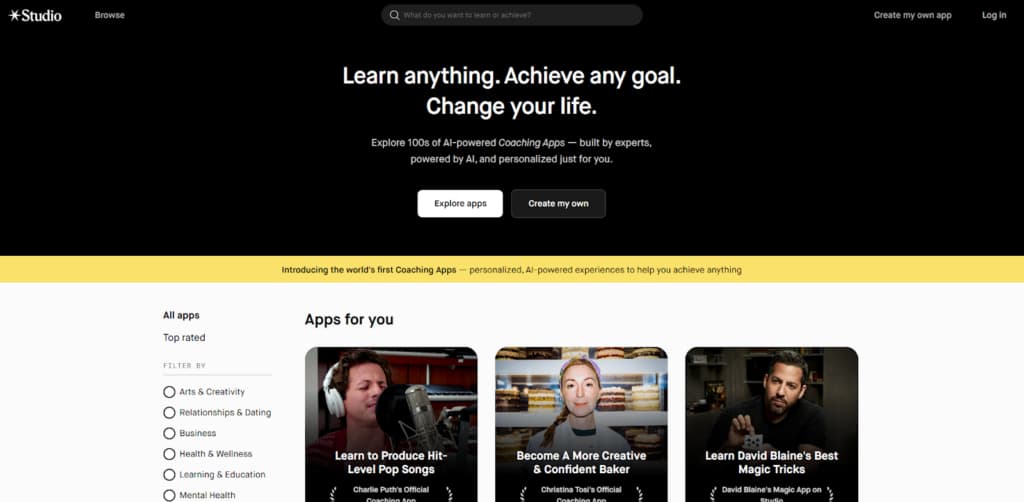
Studio offers project-based courses for creative professionals. Music production, photography, culinary arts, and design. Instruction comes from working practitioners. Course completion requires submitting tangible work.
How Projects Create Action
Project requirements compel output. Users must apply the instruction to produce something. This represents a stronger application mechanism than passive alternatives. Action-generating mechanics:
- Course completion requires submitted work.
- Skill application occurs during learning.
- Tangible output provides completion evidence.
- Problem-solving requires active retrieval.
These elements make learners more likely to take concrete action rather than only absorb information. However, continued behavior change depends on whether users repeat and extend those actions after the course ends.
Why Action Stops After the Course
Projects are discrete. A mixing course produces one project. Then the course ends. There is no structured continuation. No scheduled practice. No return prompting. Post-course action cessation:
- No repetition mechanism after project completion;
- Single project provides limited behavioral rehearsal;
- Return to skills is user-initiated, not prompted;
- Courses are consumed in sessions, not increments;
- Platform success metrics do not include post-course behavior.
Studio teaches skills effectively for immediate application. Whether those skills become regular behavior is not addressed.
5. Udemy
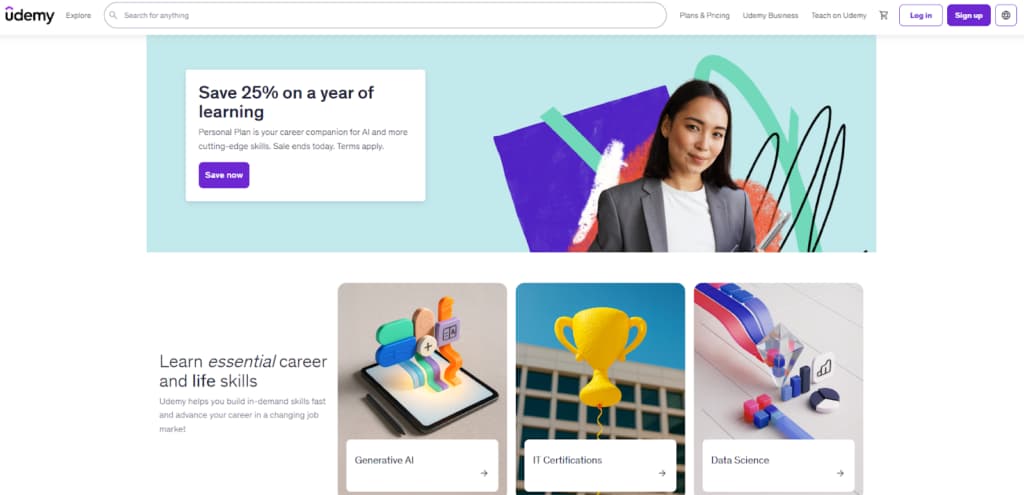
Udemy operates as a large-scale course marketplace. Hundreds of thousands of courses are available. Topics span technical certification, creative arts, business strategy, and personal development. Users purchase individual courses or subscribe for catalog access.
Where It Delivers Knowledge
Users seeking instruction on specific, narrow topics are likely to find relevant content. Catalog depth is the platform’s primary distinction. Knowledge transmission advantages:
- Unmatched course volume and topic breadth;
- Lifetime access for individual course purchases;
- Comprehensive treatment of technical subjects;
- Frequent pricing promotions reduce access barriers.
These strengths make the platform effective for acquiring information across a wide range of subjects. However, they do not inherently support turning that knowledge into sustained behavioral change.
Why Behavior Change Is Rare
Udemy does not structure behavior. It does not prompt return. It does not schedule practice. It does not require an application. Course completion is the terminal event. What happens afterward is entirely user-dependent. Behavioral transfer failures:
- No application exercises or skill practice;
- No scheduled repetition or return prompting;
- Passive video constitutes primary format;
- Instructor incentives misaligned with student outcomes;
- Platform success is measured in sales, not behavior change.
Udemy is a reference library. It is not configured for behavioral transformation.
Conclusion
Behavioral change depends less on exposure to ideas and more on repeated, practical application. Platforms that structure regular action are more likely to influence what users do outside the app than those that focus primarily on information delivery or inspiration.
Within this framework, Riseguide ranks highest because it integrates small, repeatable actions into a daily routine. Other platforms serve valuable roles in inspiration, deep learning, project work, or reference, but they rely more heavily on user initiative to translate insight into consistent behavior. For users seeking lasting change rather than occasional motivation, these structural differences are significant.